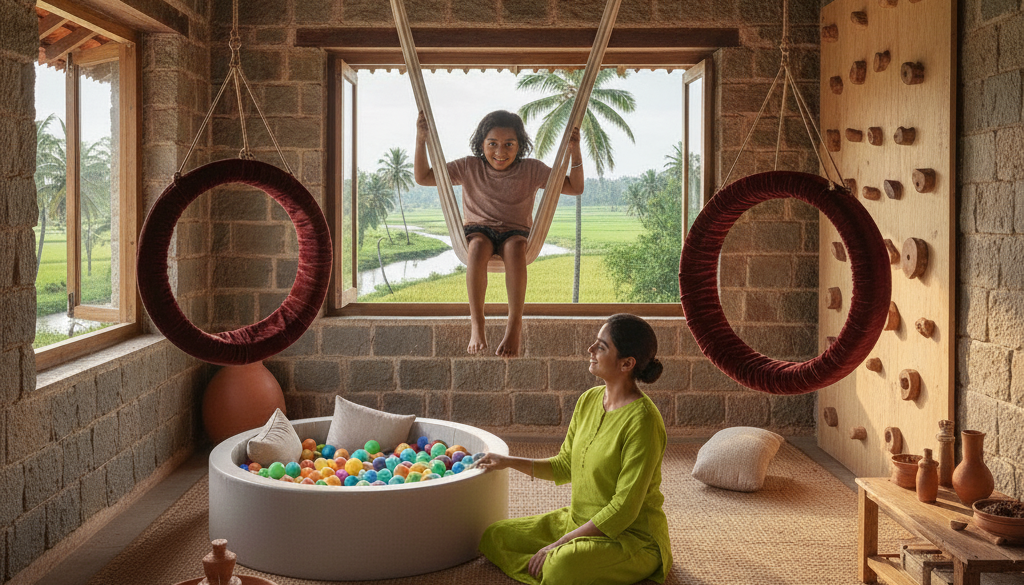
Sensory Integration Therapy helps children process touch, sound, movement, and visual input more effectively. Through playful, structured activities, therapists build coordination, focus, and emotional regulation. Families learn practical strategies to use at home, helping children feel calmer, more confident, and more independent in daily routines at school, home, and play.
Sensory Integration Therapy
Sensory Awareness and Growth Program
Sensory Integration Therapy helps children organize sensory input, improve focus, coordination, behavior, and daily functioning through structured, play-based activities effectively.
Sensory Regulation
Helps manage sensory responses for calmer daily routines.
Motor Coordination
Builds strength and coordination through guided sensory play.
Building Calm Through Sensory Support
Sensory Integration Therapy helps children understand, organize, and respond to the information their brains receive from touch, sound, movement, and vision. Through guided, play-based activities, therapists gently challenge the senses to improve body awareness, coordination, attention, and self-regulation. When the brain processes sensory input more smoothly, children feel calmer, more confident, and more capable of handling daily tasks such as dressing, writing, feeding, and classroom participation. Sessions are individualized, goal-oriented, and created to be engaging and motivating, so progress feels natural rather than overwhelming. Parents are included with practical strategies to practice at home, helping gains carry into real-life situations. Over time, children develop stronger coping skills, better behavior, and greater independence across school, home, and social environments. This supportive approach nurtures growth, resilience, and lasting functional change.
Sensory Awareness
Helps children recognize and interpret sensory information effectively.
Adaptive Responses
Encourages appropriate reactions to everyday sensory experiences and environments.
Cognitive Support
Enhances focus, problem-solving, and learning through organized sensory input.
Supporting Development, Communication, and Wellness
Personalized, evidence-driven therapy programs for speech, behavior, sensory, and neurological challenges across all life stages.
Expert Care
Tailored, Proven, Multidisciplinary Therapy
Lifespan Support
Specialized, Evidence-Based, Client-Centered Care
Accessible Therapy
Convenient sessions for all ages.
Empowering Lives
Individualized, Proven, Comprehensive Care
Patients Served
0
k+
Improving Lives Through Targeted Therapy - Don't Wait
Providing specialized, evidence-based therapy services to support developmental, communication, and neurological growth for individuals of all ages.
Your Queries Answered
It’s a play-based therapy that helps children process and respond to sensory input (touch, sound, movement, vision) more effectively.
Children with sensory processing difficulties, autism, ADHD, developmental delays, coordination problems, or challenges with behavior and attention.
Therapists use structured, fun activities—like swings, obstacle courses, textures, and movement—to gently challenge and train the brain to organize sensations.
Every child is different. Many families notice changes within a few months, with steady progress over regular, consistent sessions.
Yes. Parent guidance and home activities help carry therapy progress into daily routines, making improvements more consistent and long-lasting.
We’re Here To Help contact us anytime
Connect with us to explore therapy options, book sessions, and receive professional advice for all ages.
Phone Number
+91 6282461125
+91 6238761125
info@talknthriverehab.com